european economics at the 11th Central & Eastern Europe Nuclear Industry Congress 2026
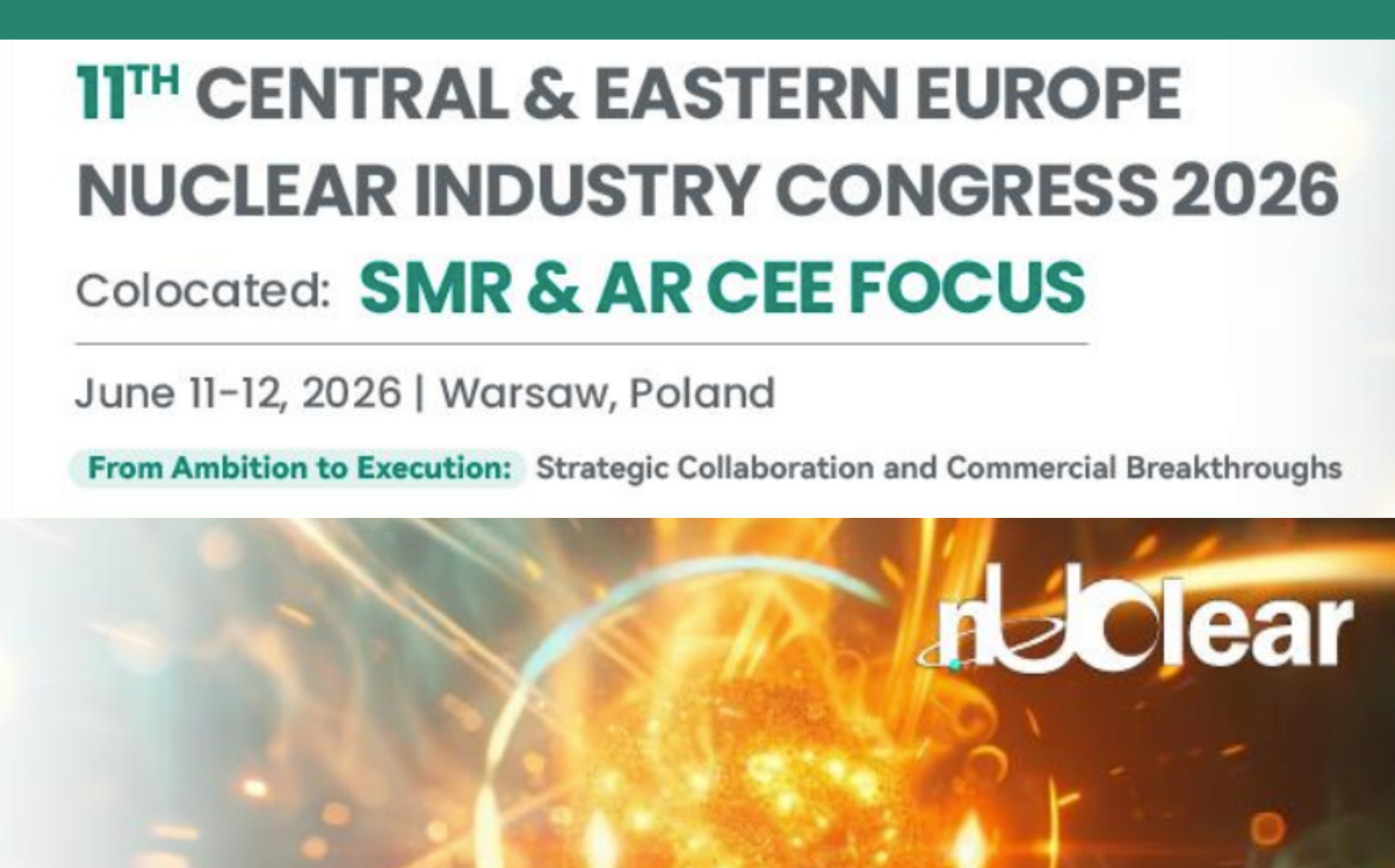
The european economics team attended the 11th Central & Eastern Europe Nuclear Industry Congress (CEE NIC 2026), held in Warsaw, Poland, on 11 and 12 June 2026. Co-organised with SMR & AR CEE FOCUS, this edition brought together public decision-makers, regulators, industry players, investors and technical experts around the challenges of nuclear deployment in Central and Eastern Europe.
The region accounts for more than €114 billion of planned investment and over 15 GW of new capacity in the pipeline. The event’s agenda was built around three levers: financing innovation, supply-chain localisation and regulatory harmonisation.
A solid track record in European public funding
Founded in 2009, european economics is an independent consultancy specialising in State aid and European funding, supporting strategic industrial projects across Europe.
- 257 projects supported since 2009, representing €106 billion of activity
- €46 billion in public funding secured, including €16.3 billion over the 2023-2025 period
- a 100% success rate on State aid notifications to the European Commission
- 211 clients, from high-growth SMEs to large multinationals, across all industrial sectors
On the IPCEI front alone, european economics has secured €12.7 billion in funding for 151 projects, across each of the 14 IPCEIs launched to date and in 13 Member States.
Talks on nuclear financing
The day on 11 June opened with a welcome address from Marc ISABELLE, Founder and CEO, who opened the congress proceedings.
Marc ISABELLE then delivered a keynote entitled IPCEI Nuclear: a Strategic Funding Instrument for Nuclear Innovation in Europe. His presentation set out the role of State aid in financing nuclear power in Europe:
- Nuclear power already benefits from substantial State aid in several European countries (Belgium in 2025, the Czech Republic in 2024, Hungary in 2017, the Netherlands in 2023, Poland in 2025 and the United Kingdom in 2015). Unlike carbon market mechanisms, this support provides direct funding specific to each project.
- By way of illustration, Marc set out the financing structure of Poland’s first nuclear power plant, at Lubiatowo-Kopalino (3 x 1,250 MW): an equity injection representing around 30% of the project’s estimated cost (€42 billion), State guarantees on the financing debt, and a two-way contract for difference (CfD) running for 40 years.
- The IPCEI was presented as an instrument suited to R&D and first industrial deployment projects, with aid intensity of up to 100% of eligible costs, helping projects to cross the funding ‘valley of death‘.
- Marc stressed that coordination between companies, Member States and the European Commission is a key success factor in any IPCEI process.
Marc ISABELLE also took part in the panel discussion Regional Synergy, National Sovereignty and Unlocking the Multi-Billion Euro Capital Flow, which focused on the conditions for nuclear deployment in Central and Eastern Europe: regulatory harmonisation and the emergence of a ‘single market’ for nuclear components, the structuring of financing mechanisms (CfD, RAB, the Mankala model and public funding frameworks), the joint mobilisation of public, private and multilateral development bank capital, readiness for final investment decisions (FID), and the readiness of infrastructure and regional grids.
IPCEI Nuclear: a funding opportunity to structure
The IPCEI Innovative Nuclear Technologies grew out of a working group launched in April 2024 by the Joint European Forum on IPCEI (JEF-IPCEI). It was approved by the 13 Member States taking part on 9 April 2025: Belgium, Croatia, the Czech Republic, Finland, France, Hungary, Italy, the Netherlands, Poland, Romania, Slovenia, Spain and Sweden. France coordinates the activities relating to fission, and Italy those relating to fusion.
This approval by the Member States opened the project’s structuring phase, with support from the European Commission’s Design Support Hub.
The initiative forms part of the Clean Industrial Deal and echoes the Nuclear Illustrative Programme (PINC), presented on 13 June 2025, which points to an order of magnitude of around €241 billion of investment by 2050 for extending the life of existing reactors and building new capacity, together with additional needs for SMR/AMR, microreactors and, in the longer term, fusion.
Let’s continue the conversation
european economics’ presence at CEE NIC 2026 confirms its expertise in European public funding and its role in supporting strategic industrial projects in the nuclear sector.
Were you unable to meet us in Warsaw, and would you like to discuss public funding opportunities in nuclear power or strategic energy technologies?
Contact us to arrange a meeting!


Discover other articles