
The transition towards decarbonised mobility lies at the heart of the European Green Deal. The electrification of road, maritime and rail transport, together with the development of solutions based on renewable hydrogen and the large-scale deployment of renewable energy, requires competitive and resilient European industrial value chains, particularly in the field of batteries.
This transition is also accompanied by the rise of connected vehicles, which rely on digital infrastructure, data processing capabilities and technological standards, thereby reinforcing challenges related to sovereignty, cybersecurity and control over associated industrial ecosystems.
Mobility now represents one of the central pillars of Europe’s economic and industrial transition. At the intersection of climate objectives, technological sovereignty and global competition for clean technologies, it is attracting significant investment and shaping strategic decisions for the decades ahead.
Transport accounted for approximately 31% of total greenhouse gas emissions in the EU-27 in 2023 (EEA, 2025), including aviation and international maritime transport, making it one of the main levers for achieving climate neutrality. In 2024, emissions from the sector reached around 1.05 billion tonnes of CO₂ (T&E, 2025), illustrating the scale of the decarbonisation challenge.
This transformation primarily concerns road transport, which accounts for nearly 73% of sector emissions (EEA, 2025), while around 78% of inland freight in Europe is transported by road (T&E, 2025). In this context, the transition towards low-carbon technologies is accelerating: in 2024, 14.5% of new cars registered in the European Union were already zero-emission vehicles (EC, 2024).
Industrial and technological transformations
The decarbonisation of transport is not limited to the electrification of vehicles. It involves a profound transformation of industrial value chains (batteries, hydrogen, critical materials, energy infrastructure), as well as coordinated modernisation of road, rail and port networks.
At the same time, the automotive industry remains a major economic pillar, accounting for more than 10 million direct and indirect jobs in the European Union (EEA, 2026).
In addition, connected and automated mobility (CAV) represents a strategic lever for Europe, at the intersection of decarbonisation, road safety and industrial competitiveness objectives. According to the European Commission, CAV aims to make transport systems safer, cleaner, more efficient and better integrated through the adoption of digital technologies, sensors and vehicle-to-infrastructure communications (EC, 2024).
By optimising traffic flows and integrating electric and hydrogen vehicles, CAV, combined with electric vehicles, have the potential to reduce emissions (Willmer, 2025), while stimulating innovation in embedded software, electronic components and smart infrastructure (EC, 2026). Their development strengthens the European Union’s technological autonomy and opens up new economic opportunities in mobility services and intelligent network management.
In this context, the challenges facing the sector go beyond the environmental dimension alone. They concern the European Union’s industrial resilience, its ability to attract and secure strategic investment, and its position in the global competition for low-carbon technologies.
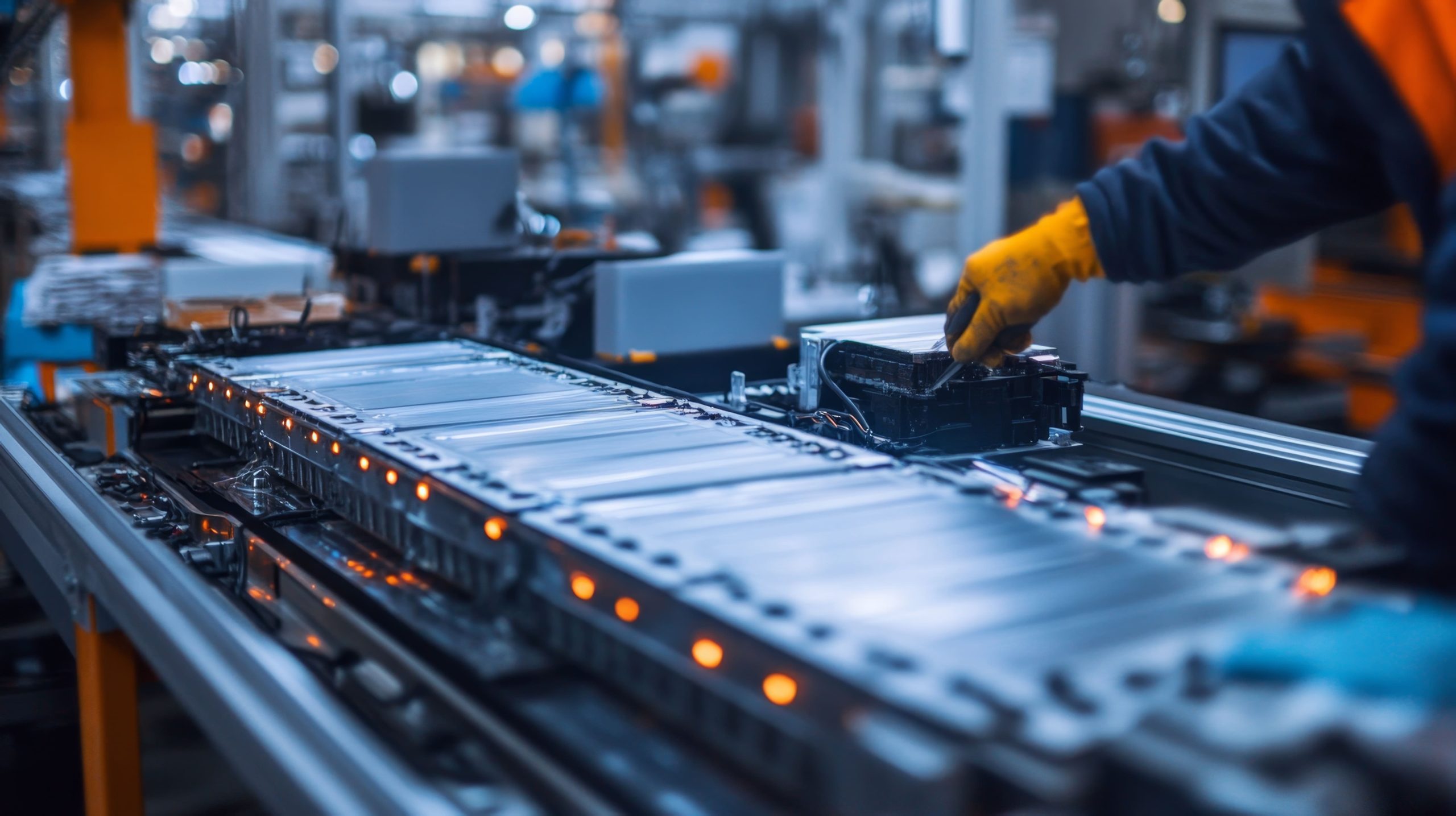
Technicians assembling electric vehicles
What are the main challenges facing the mobility sector in Europe?
These major challenges increase the strategic vulnerability of the European continent and limit its ability to achieve its carbon neutrality objectives.
- Dependence on critical raw materials: the transition to electric mobility is driving a structural increase in demand for lithium, cobalt, nickel and rare earths. However, the European Union remains highly dependent on third countries for the refining and processing of these resources, particularly China, which accounts for around 90% of rare earth processing capacity and 60% of lithium processing (Reuters, 2023). This dependence exposes European industry to geopolitical risks, increased price volatility and potential supply disruptions. As such, raw materials have become a key issue of industrial sovereignty.
- International competition and competitiveness distortions: the energy transition is accompanied by an intensification of industrial policies in major economies. China benefits from an industrial lead supported by massive public subsidies (ITIF, 2024). The United States, through the Inflation Reduction Act (IRA, 2022), has mobilised USD 369 billion in direct subsidies and tax credits to attract investment in electric vehicle battery gigafactories (UN Trade and Development, 2022). In this context, Europe faces a risk of losing investment and increased competition across strategic value chains.
- Industrial scale-up and execution risks: moving from strategic ambition to industrial capacity is a major challenge. The commissioning of gigafactories in Europe, such as Northvolt in Sweden or ACC in France and Germany, requires multi-billion-euro investments, close public coordination and full technological control. Northvolt’s bankruptcy in March 2025, followed by the acquisition of its assets by the US start-up Lyten, which plans a relaunch in 2026 (Reuters, 2025), illustrates the fragility of certain projects. According to Transport & Environment (2025), nearly 68% of Europe’s potential battery production capacity (1.2 TWh out of 1.8 TWh planned) is at risk of being delayed, reduced or not delivered without further action (funding, permitting, policy framework).
- Transformation of heavy transport segments and infrastructure constraints: the European strategy for sustainable and smart mobility (European Commission, 2020) sets a target of reducing transport emissions by 90% by 2050 and implies a systemic transformation of road, rail and maritime transport. This transition relies not only on the deployment of low-emission vehicles, but also on the development of alternative fuels infrastructure, including electric charging and hydrogen, as well as the modernisation and electrification of networks, in line with the Fit for 55 package and the Alternative Fuels Infrastructure Regulation. Decarbonisation therefore depends on coordinated adaptation of vehicles, infrastructure and energy systems.
- Circularity and securing secondary resources: nearly half (49%) of portable batteries and accumulators sold in the EU were collected for recycling in 2022 (Eurostat, 2024). Beyond environmental considerations, the development of a circular economy represents a strategic lever to secure secondary supply, reduce external dependence and improve the carbon footprint of the value chain.
- Hydrogen, competitiveness and industrial maturity: low-carbon hydrogen is identified as a strategic complement to electrification, particularly for heavy-duty and long-distance uses.
Its competitiveness depends on access to abundant decarbonised electricity, the large-scale deployment of electrolysers and suitable infrastructure (transport, storage, refuelling stations), as well as the industrial maturity of hydrogen mobility technologies (fuel cells, tanks, powertrains) (European Commission, IPCEI Hydrogen, 2022–2024). The challenge lies in moving from the demonstration phase to competitive industrialisation.
- Technological and infrastructure challenges: the deployment of CAV in Europe requires reliable and secure systems, as well as intelligent infrastructure capable of supporting real-time communication between vehicles and networks (V2X). The absence of common standards, the need for robust networks and cybersecurity challenges remain major barriers to large-scale adoption. Initiatives such as the SELFY project, funded by the EU to strengthen cybersecurity in connected vehicles, illustrate these critical technological challenges for cooperative and automated mobility in Europe (CORDIS, 2025).
- Regulatory and legal challenges: a harmonised European legal framework is still lacking for CAV approval, liability in the event of incidents and data governance. European policies explicitly recommend establishing a common framework for testing, approval and transparency of AI algorithms, as well as reliable V2X standards at EU level. These regulations are essential to reduce fragmentation between Member States and facilitate the commercialisation of safe and reliable CAV solutions (Roadview, 2025).
Which European initiatives are structuring the sector?
In recent years, several Important Projects of Common European Interest (IPCEIs) have helped structure strategic industrial value chains related to mobility.
- IPCEI Batteries (2019 and 2021): first launched in 2019 and extended in 2021, this IPCEI has become one of the main European industrial instruments in this field. The two waves mobilised public funding of more than EUR 6.1 billion, triggering over EUR 14 billion in private investment. These projects cover the entire value chain, from extraction to recycling (European Commission, 2021).
- IPCEI Hydrogen (Hy2Tech, Hy2Use, Hy2Infra, Hy2Move, 2022–2024): building on this momentum, the European Union has structured the hydrogen value chain through several waves of dedicated IPCEIs, aimed at accelerating technological development, first industrial deployment (FID) of breakthrough innovations and the rollout of cross-border infrastructure, including a mobility component (IPCEI Hy2Move) covering heavy-duty, maritime and aviation transport (European Commission, IPCEI Hydrogen value chain, 2022–2024).
Building on existing IPCEIs, new initiatives are being considered to further strengthen the European Union’s strategic priorities:
- IPCEI Clean, Connected & Autonomous Vehicles (IPCEI CCAV): an initiative currently under development at European level, aimed at advancing technologies and value chains for clean, connected and autonomous vehicles (European Commission, JEF-IPCEI, 2025).
- IPCEI Circular Advanced Materials (IPCEI CAM): a candidate IPCEI dedicated to advanced and circular materials for clean technologies, aimed at accelerating innovation, industrialisation and circularity along the materials value chain (European Commission, Design Support Hub / JEF-IPCEI, 2024).
- IPCEI Critical Raw Materials (IPCEI CRM): an initiative currently under identification aimed at strengthening access to, processing of, substitution for and recycling of critical raw materials essential to batteries, hydrogen and renewable energy (European Commission, JEF-IPCEI, 2025).
Beyond IPCEIs, several other European initiatives are also key priorities:
- European Battery Alliance (EBA, 2017): brings together more than 800 industrial and institutional stakeholders to develop a competitive European battery value chain.
- Net-Zero Industry Act (2023): identifies batteries as strategic technologies for achieving carbon neutrality and supports gigafactory projects.
- Critical Raw Materials Act (2023): a regulation aimed at securing the supply of lithium, cobalt, nickel and other critical raw materials required for batteries, hydrogen and renewable energy. It strengthens EU capabilities across the entire value chain (production, processing, recycling) and sets 2030 targets to extract at least 10%, process at least 40% and recycle at least 25% of annual needs.
- Connecting Europe Facility (CEF Transport): funding for sustainable rail and port infrastructure, including line electrification and low-emission ports, to support the transition towards decarbonised multimodal mobility (European Commission, CEF Transport).
- Horizon Europe – Cluster 5: an R&D programme supporting projects at lower maturity levels in smart and sustainable transport, including battery trains, hybrid vessels and green logistics.
- LIFE Programme: support for environmental projects, including green ports, low-emission vessels and sustainable urban mobility demonstrators.
- Innovation Fund: funding for pilot and demonstration projects, including support for bringing innovations to market in the decarbonisation of transport, batteries and infrastructure.
How does european economics support mobility and battery stakeholders?
european economics provides its expertise to mobility and energy industrial players at every stage of project development.
- Identification of relevant public funding and deployment of an integrated funding strategy, combining multiple public funding schemes for the most ambitious projects,
- Project structuring and preparation to meet programme requirements (innovation, economic impact),
- Monitoring of administrative and regulatory procedures with European and national authorities.
Our team has already contributed to the success of numerous large-scale projects in the mobility and battery value chain, securing public funding amounting to several billion euros for our clients.
Conclusion
Decarbonised, connected and automated mobility is one of the pillars of the European industrial strategy.
In the face of intense global competition and major structural challenges, Europe must accelerate investment and strengthen its sovereignty.
Drawing on its experience in

