
Energy & Environment
At the core of Europe’s industrial transition
european economics has been supporting major structuring projects in these areas for several years, securing significant public funding for its clients.
The energy transition and environmental protection have become an industrial, economic and geopolitical imperative for the European Union. They require profound transformations of energy production and consumption systems, heavy industry, and associated value chains (low-carbon technologies, critical raw materials, infrastructure). The EU has enshrined in law the objective of climate neutrality by 2050, with an intermediate target of reducing net emissions by at least –55% by 2030 (vs 1990) (European Commission, 2023)
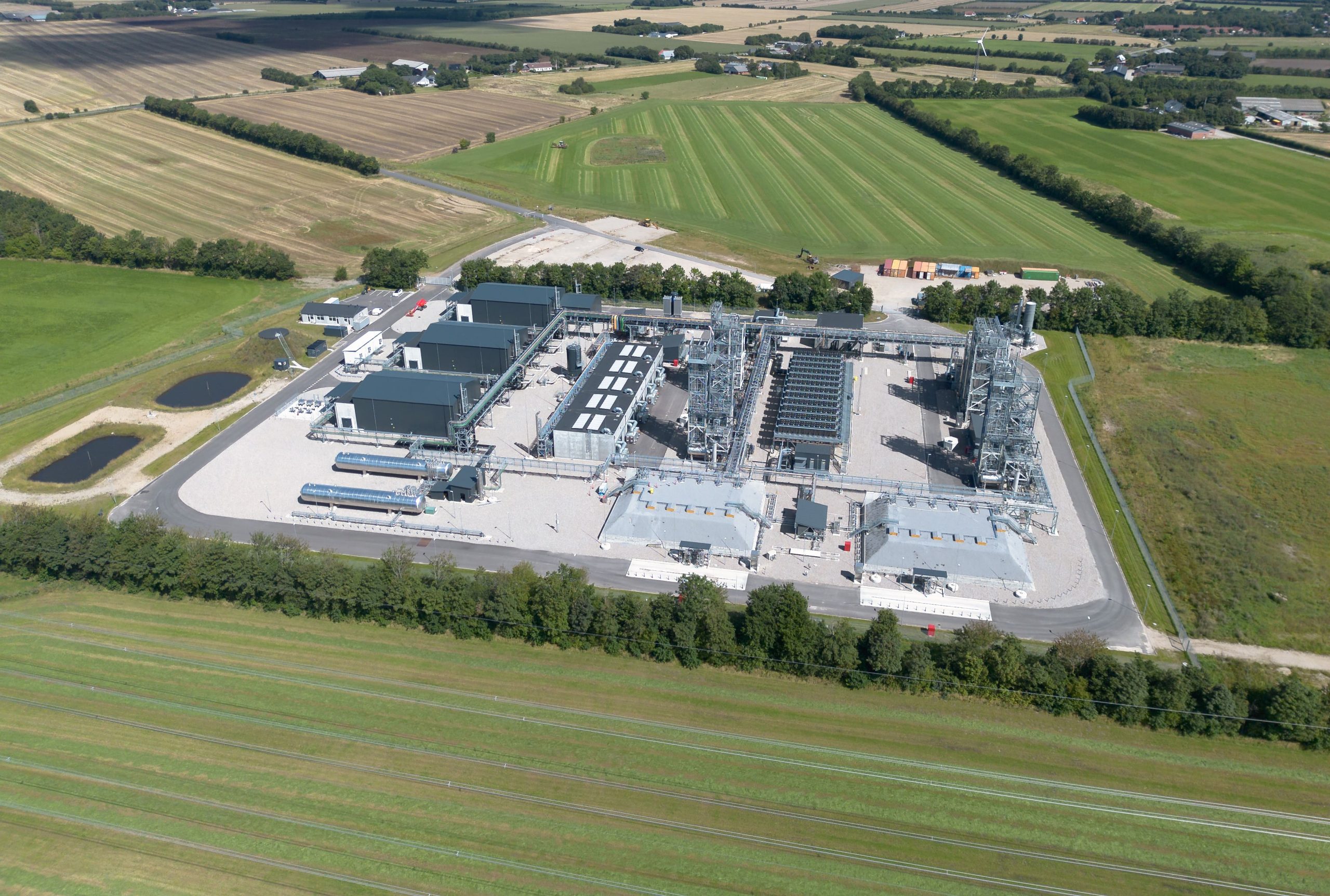
European Energy’s PtX facility in Kassø, Denmark
Why are energy and the environment strategic priorities for the EU?
Within this highly ambitious objective, the transformation of the energy system is central: the energy sector accounts for slightly more than 75% of total greenhouse gas emissions in the EU (in the broad sense of the “energy system”) (European Commission, 2020).
Beyond climate considerations, the energy crisis linked to the wars in Ukraine (since 2022) and in the Middle East (since 2026) has highlighted the need to reduce dependence on hydrocarbon imports, secure supply, and accelerate investment in low-carbon infrastructure and technologies.
The REPowerEU plan is fully aligned with this dynamic: the revised Renewable Energy Directive targets 42.5% renewable energy by 2030 (binding target), with an ambition to reach 45% (European Commission, 2022).
What challenges are shaping the future of the energy and environment sector?
The main structuring challenges are the resilience of the electricity system in the face of intermittency, the need to accelerate project deployment, as well as the imperative of industrial competitiveness.
Given the intermittent nature of renewable energy, the rapid integration of solar and wind requires the development of storage solutions (batteries, hydrogen, thermal storage), smarter and more interconnected electricity grids, as well as flexibility mechanisms (demand-side management, peak capacity, system services) (IEA, 2023).
Regarding project acceleration, in the energy sector, it is observed that even when technologies are mature, 2030 targets depend on speed of execution, determined by permitting, grid connections, environmental constraints, local acceptance, land availability, and the robustness of supply chains (European Commission, 2023). As a result, large energy projects often face local opposition that can slow down their deployment (PWC, 2020; IEA 2023).
Finally, a critical factor for the EU’s industrial competitiveness is the ability to relocate or develop industrial capacity in key segments. For example, China currently dominates the photovoltaic value chain, highlighting a major strategic imbalance: the JRC of the European Commission indicates that in 2024, China accounted for 96% of polysilicon, 97% of wafers, 92% of cells and 86% of modules globally, and represented 74% of global turnover across the value chain.
This unfavourable positioning of Europe is also due to the limited availability of critical raw materials: dependence on lithium, nickel, cobalt, graphite and rare earths weakens the value chain for batteries, wind energy, power electronics and hydrogen. The EU has structured a response with targets for 2030: 10% extraction, 40% processing, 25% recycling, and no more than 65% dependence on a single third country for each strategic material (European Commission, 2022).
The Old Continent has thus initiated a process of decarbonising heavy industry (e.g. steel, cement, chemicals, refining). These sectors require deep transformations (electrification, hydrogen, efficiency, low-carbon heat, CCUS), and their CAPEX requirements are often incompatible with standalone business models without public support and appropriate support mechanisms (IEA, 2023).
Clean tech manufacturing: producing transition technologies in Europe
The energy transition does not rely solely on the deployment of low-carbon infrastructure, but also on the ability of Europe to manufacture net-zero technologies and their strategic components domestically. The Net-Zero Industry Act (NZIA) sets a structuring objective: to achieve by 2030 a European manufacturing capacity covering at least 40% of annual deployment needs for key technologies such as solar PV, wind, batteries, heat pumps and electrolysers (European Commission, 2021). This ambition covers not only final products, but also critical components and sub-systems, including PV cells and wafers, battery active materials and modules, wind nacelles and power electronics, heat pump compressors, and electrolyser stacks and membranes.
To support this industrialisation, the European State aid framework has evolved with the adoption of the Clean Industrial Deal State Aid Framework (CISAF), which replaces the TCTF. This framework aims to secure sufficient manufacturing capacity in clean technologies, support industrial decarbonisation and create incentives for private investment. The framework is applicable until 31 December 2030 (European Commission, 2025).
What policy responses has the European Union implemented?
The European Union and its Member States have introduced several structuring instruments to address the challenges of the energy and environmental transition. These include:
- IPCEIs (Important Projects of Common European Interest) dedicated to:
- Hydrogen IPCEIs (Hy2Tech 2022, Hy2Use 2022, Hy2Infra 2024, Hy2Move 2024): €19 billion in approved public funding to support R&D, industrial scale-up and infrastructure, across several waves.
- IPCEI Circular Advanced Materials (IPCEI CAM): an initiative aimed at accelerating advanced and circular materials essential for clean technologies (batteries, PV, wind, etc.).
- IPCEI Innovative Nuclear Technologies (under preparation): an initiative intended to support the European nuclear sector (innovation, industrialisation, associated infrastructure), contributing to energy sovereignty and decarbonisation.
- IPCEI Critical Raw Materials (IPCEI CRM): an initiative currently under exploration at European level to strengthen capabilities across the critical raw materials value chain (extraction, processing, refining, recycling).
- Net-Zero Industry Act (NZIA, 2023): objective to produce in Europe at least 40% of strategic low-carbon technologies by 2030, including electrolysers, solar panels and heat pumps.
- Critical Raw Materials Act (2023): a measure to secure the supply of critical raw materials required for batteries, hydrogen and renewable energy. This regulation aims to strengthen EU capabilities across the entire value chain by increasing domestic production, processing and recycling. It sets 2030 targets: at least 10% extraction, 40% processing and 25% recycling.
- Innovation Fund: more than €40 billion planned by 2030 to finance demonstration projects in industrial decarbonisation, carbon capture and utilisation, and innovative clean energy technologies, including innovative nuclear demonstration projects (European Commission, 2025).
Why is State aid often necessary to support investment in the energy transition, green energy and decarbonisation?
A first reason relates to negative externalities arising from pollution: greenhouse gas emissions generate a collective cost that is not fully borne by emitters. Without full internalisation of the carbon cost, green investments remain insufficient (see this report from the DGE).
A second reason relates to economic spillovers: the benefits of green innovation extend widely across sectors, firms and regions, but investors capture only part of the value created, reducing their incentive to invest (see this report from the MIMIT).
In addition, most projects in this sector involve long payback periods and depend on coordination between multiple stakeholders, making revenues often uncertain or partially non-monetisable. In this context, public funding plays a crucial role in addressing these market failures, reducing risk and mobilising private capital, with the objective of catalysing, rather than replacing, private investment.
How does european economics support stakeholders in the energy and environment sector?
European Economics has developed recognised expertise across the entire energy transition value chain:
- Hydrogen: support for industrial and infrastructure projects under IPCEIs, with nearly €7 billion in public funding secured.
- Nuclear: strategic and financial advisory for European IPCEI Nuclear projects.
- Renewable energy: support for photovoltaic, wind and biomass projects, from R&D through to large-scale deployment.
- Carbon-intensive industries
- Cross-cutting projects: development of electrolyser gigafactories and storage infrastructure.
Our role is to transform ambitious industrial and environmental objectives into concrete, financed projects through in-depth expertise in national and European funding mechanisms, as well as applicable regulatory frameworks.
Conclusion
The European energy and environmental transition is based on demanding strategic choices. In a sector where investment costs, technological challenges, execution constraints and State aid rules are decisive, access to public funding and its successful mobilisation become critical factors.
Through its experience, European Economics contributes to the emergence and success of high-impact industrial projects supporting energy sovereignty, clean tech reindustrialisation and decarbonisation in Europe.

