
Microelectronics & Semiconductors
A strategic pillar for Europe
european economics draws on extensive sector expertise to guide clients through the complexity of public funding mechanisms and to transform industrial ambitions into financed and deployed projects.
Semiconductors are not merely another industrial sector. They represent the invisible infrastructure of the modern economy. Every strategic value chain now relies on the ability to design, manufacture and secure high-performance electronic chips.
Digital transformation, the electrification of mobility, the decarbonisation of energy systems, cybersecurity, defence, space and artificial intelligence: none of these transformations can take place without advanced microelectronic components.
In this context, control over semiconductors goes beyond purely industrial considerations. It underpins Europe’s technological sovereignty, economic resilience and geopolitical capacity for action. Yet global production remains highly geographically concentrated, particularly in East Asia for the most advanced technologies. This concentration creates a systemic risk for economies dependent on imports.
Why is the semiconductor industry a priority for Europe?
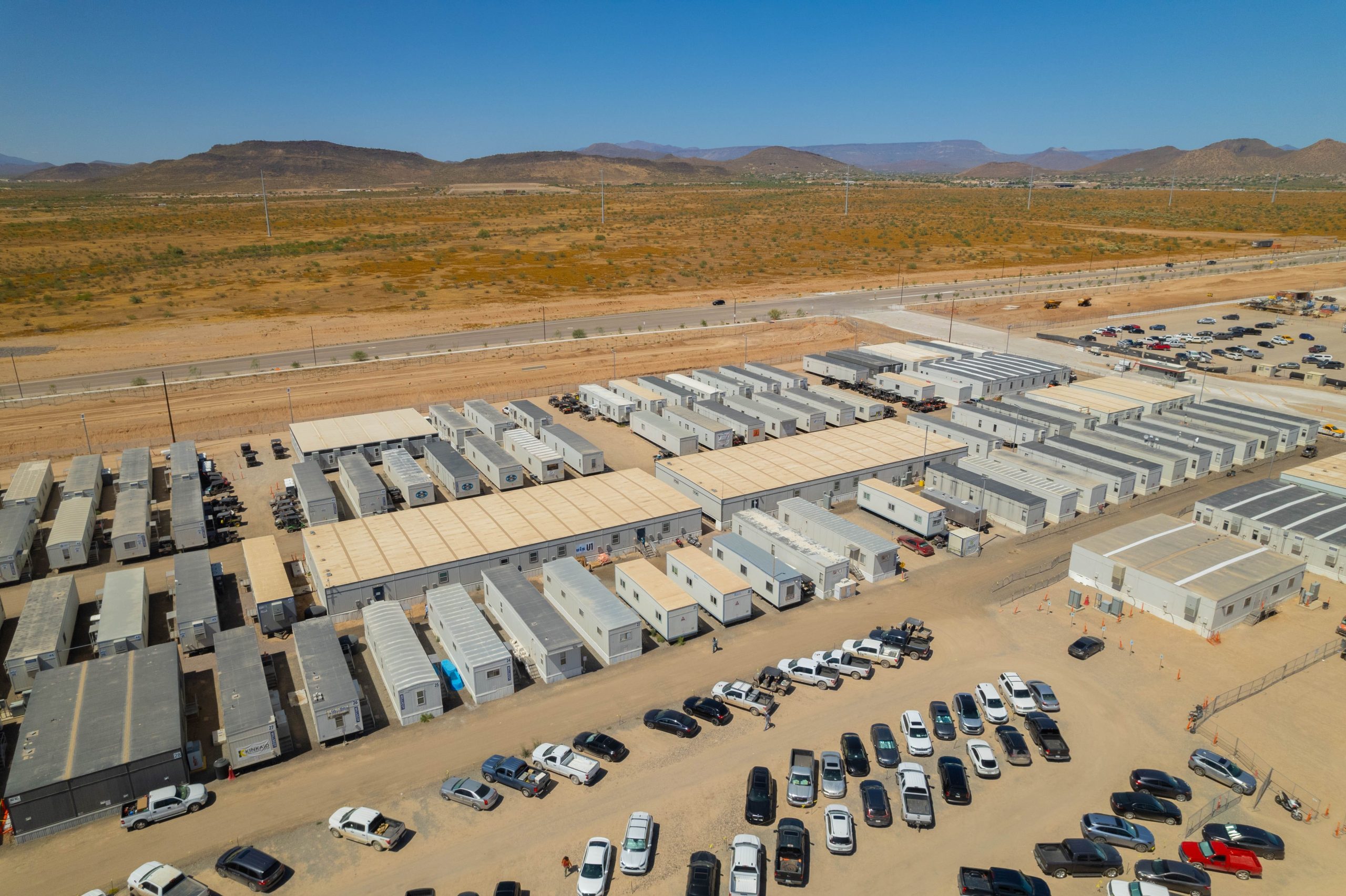
Semiconductor manufacturing facility in Taiwan
The pandemic and recent geopolitical tensions have highlighted the structural vulnerability of the European Union. Supply chain disruptions have affected the automotive, electronics and medical industries, as well as many other critical sectors. This dependence concerns both the production of advanced chips, so-called “legacy” components essential to traditional industries, and the critical materials required for their manufacture.
In response, the European Union has set a strategic policy objective: increasing its share of global semiconductor production to 20% by 2030, compared with approximately 9.4% today (SIA Report, 2025). Achieving this objective will require levels of public and private investment comparable to those deployed in the United States and Asia.
What challenges does the semiconductor industry face in Europe?
- Exceptional capital intensity: building a semiconductor manufacturing plant requires several billions of euros in initial investment, with costs rising as technological complexity increases (wafer manufacturing, front-end). Samsung Electronics announced in 2021 an estimated investment of USD 17 billion for a manufacturing facility in Taylor, Texas (Samsung, 2021).
- Heavily subsidised international competition: in the United States, the CHIPS and Science Act allocates USD 52.7 billion to manufacturing, R&D and workforce development, complemented by tax incentives (McKinsey, 2022). In China, the “Big Fund” has raised more than RMB 683 billion (≈ USD 94 billion) since 2014, with a third phase established in 2024 with registered capital of approximately RMB 344 billion (≈ USD 47.5 billion) (USCC, 2025; Reuters, 2024).
- Project timing risks in a cyclical context: some European projects illustrate the sensitivity of semiconductor investments to downstream market cycles. In Germany, automotive industry production declined by 7.2% in 2024 year-on-year (Destatis, 2025). In this context, Intel confirmed in September 2024 that construction of its Magdeburg project would be postponed by at least two years (Intel, 2024). Wolfspeed has also delayed its project in Germany, indicating that construction would not begin before mid-2025 (Reuters, 2024).
- Skills shortages: by 2030 the industry is expected to require an additional 1 million skilled workers worldwide, with significant pressure on engineering profiles in Europe (SEMI, 2025).
- Regulatory constraints and implementation timelines: delivery timelines are a key competitiveness factor. Manufacturing facilities in East Asia often reach volume production 28 to 32 months after construction begins, compared with 40 to 50 months in Europe, while some projects in the United States have been delayed beyond 50 months due to permitting and construction timelines (McKinsey, 2025). In Europe, relatively few projects are currently under construction, with timelines slowed by state-aid procedures and local constraints (Reuters, 2024).
- Environmental pressure and intensive resource use: chip manufacturing requires large volumes of water. A semiconductor fabrication plant may consume up to approximately 38 million litres of water per day, equivalent to the daily consumption of around 33,000 American households, according to industry estimates (Semiconductor Digest, 2025).
- Dependence on critical raw materials: certain key inputs remain highly concentrated geographically. The U.S. Geological Survey indicates that China accounts for approximately 99% of global primary gallium production and about 68% of refined indium production (U.S. Geological Survey, 2025; U.S. Geological Survey, 2023).
How are European public policies responding?
The European Union and its Member States have introduced several structural instruments to support research, innovation and industrial scale-up. These include:
- IPCEI (Important Projects of Common European Interest) initiatives:
- IPCEI Microelectronics (2018): €1.9 billion mobilised for 43 projects across four Member States and the United Kingdom.
- IPCEI ME/CT (2023): €8.1 billion supporting 68 projects across 14 Member States, aimed at transforming technological advances into industrial opportunities.
- IPCEI Advanced Semiconductor Technologies (IPCEI AST, 2026): the most recent initiative dedicated to breakthrough technologies intended to strengthen Europe’s strategic autonomy.
- IPCEI Circular Advanced Materials (IPCEI CAM): a structuring initiative aimed at developing advanced circular and sustainable materials essential to strategic value chains, including microelectronics, helping to reduce import dependence and reinforce industrial resilience.
- IPCEI Critical Raw Materials (IPCEI CRM): a mechanism dedicated to securing and transforming critical raw materials within the European Union, supporting projects covering extraction, refining, processing and recycling of materials required in particular for semiconductors.
- European Chips Act (2022): a framework designed to finance semiconductor gigafactories in Europe, with a total budget of €43 billion, aimed at strengthening ecosystem resilience and the sovereignty of the European semiconductor value chain (European Commission, 2022).
- Critical Raw Materials Act (2023): measures to secure the supply of critical raw materials. The regulation aims to strengthen EU capacities across the entire critical raw materials value chain by increasing domestic extraction, processing and recycling. It sets targets for 2030: at least 10% of annual EU demand extracted domestically, 40% processed within the EU and 25% recycled.
These initiatives reflect the clear commitment of European institutions to building a competitive and integrated microelectronics ecosystem.
How does european economics support microelectronics stakeholders?
With extensive experience supporting companies across existing funding opportunities, european economics assists clients at every stage of industrial and technological project development.
- Identification of relevant public funding opportunities,
- Structuring and preparation of projects to meet programme requirements (innovation, economic impact),
- Management of administrative and regulatory processes with European and national authorities.
Our team has already contributed to the success of dozens of large-scale projects across the microelectronics value chain, securing several billions of euros in public funding for our clients.
Conclusion
Microelectronics and semiconductors will shape Europe’s future competitiveness. In a sector characterised by exceptionally intense technological, economic and geopolitical challenges, public funding plays a decisive role. Through its mastery of European instruments and strong sector expertise, european economics helps its clients transform these opportunities into tangible results.

