
Cloud, Edge Computing and Artificial Intelligence (AI) technologies now form an essential trio for Europe’s competitiveness, security and sustainable digital transformation.
These three technologies are interconnected: the Cloud provides the infrastructure required for data processing and storage, Edge Computing enables local, real-time processing, while AI analyses and interprets this data to extract relevant insights. Together, they form an integrated technological ecosystem, essential to addressing challenges related to digital sovereignty, industrial competitiveness and data security.
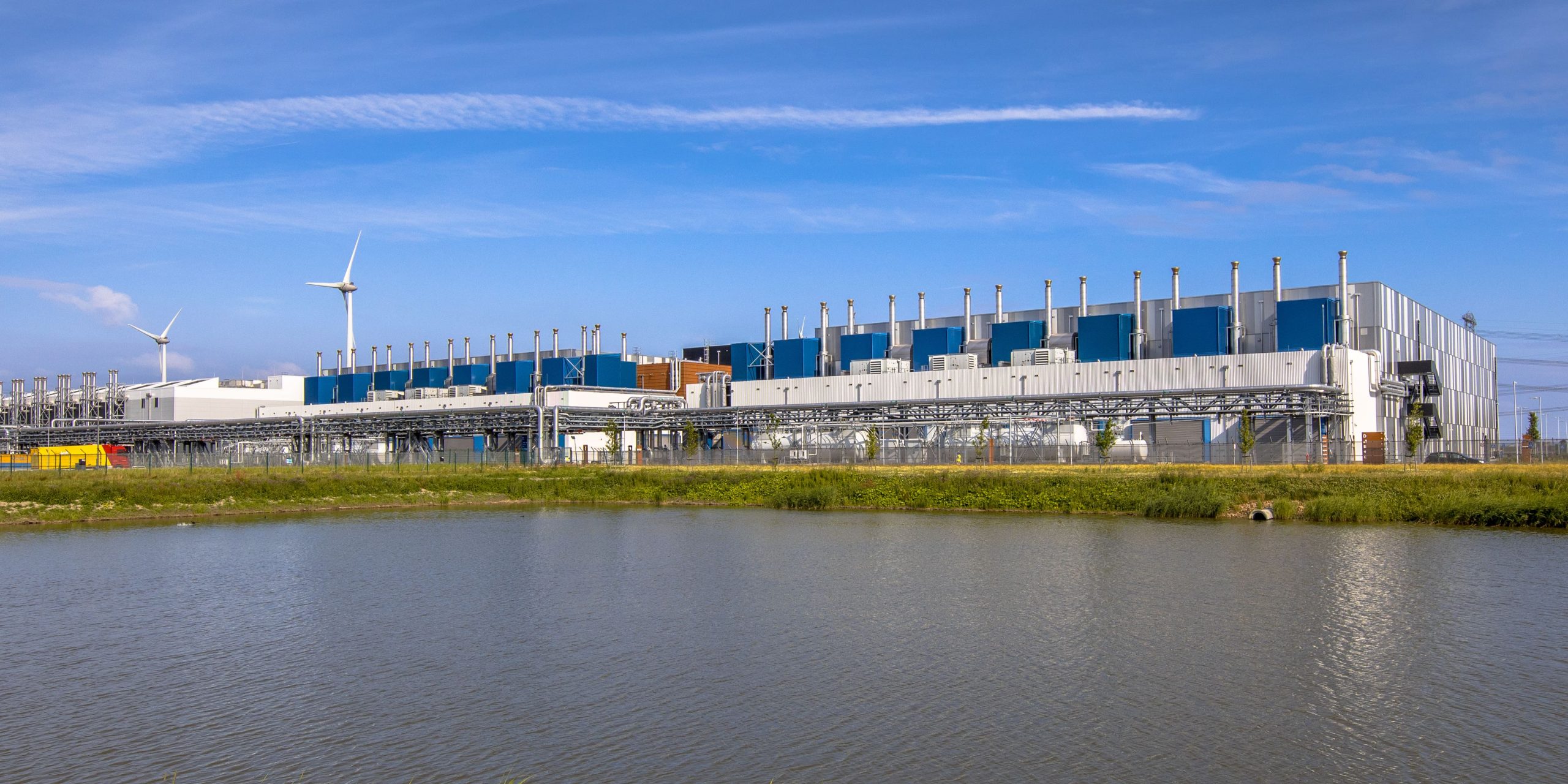
Google data centre in Eemshaven, Netherlands
What are the main challenges structuring the sector?
- Infrastructure costs and large-scale investments: in 2025, major cloud providers such as Amazon, Microsoft, Alphabet and Meta are expected to invest collectively more than USD 300 billion in infrastructure, primarily for AI (Financial Content, 2025).
- Energy consumption and sustainability: in 2025, data centres are expected to consume around 536 terawatt-hours (TWh), representing 2% of global electricity consumption. This figure is projected to double by 2030, reaching 1,072 TWh (Paperfree, 2025).
- Dependence on foreign providers: estimates suggest that Amazon, Google and Microsoft account for nearly 70% of the European market, while the largest European provider holds only 2% market share (Carnegie Europe, 2025). This situation raises issues related to digital sovereignty and data security.
- Market fragmentation and lack of venture capital: the European digital market remains fragmented, with services distributed across multiple national players. In addition, Europe faces a shortage of high-risk venture capital, which limits innovation and competitiveness in AI (Carnegie Europe, 2025).
- Regulatory challenges and compliance: the European regulatory framework, particularly the General Data Protection Regulation (GDPR) and the AI Act, imposes strict compliance requirements. Around 57% of companies favour AI governance tools and/or EU-based providers to meet these requirements (Akamai, 2025).
- Talent shortages and skills development: the lack of qualified professionals in these areas represents a major barrier to sector growth. Companies face difficulties in recruiting experts in AI, cybersecurity and data management, slowing down innovation and adoption (TechIntelPro, 2026).
Which European initiatives are structuring the sector?
The EU has already implemented several initiatives to address these challenges, including:
- IPCEI Next Generation Cloud Infrastructure and Services (IPCEI CIS)
Approved on 5 December 2023, this project mobilises up to EUR 1.2 billion in State aid from seven Member States (France, Germany, Hungary, Italy, Netherlands, Poland, Spain) to support research, development and industrial deployment of advanced technologies. This public funding is expected to unlock around EUR 1.4 billion in private investment. The objective is to develop a secure, energy-efficient and interoperable multi-provider Cloud-Edge continuum. - IPCEI Compute Infrastructure Continuum (IPCEI CIC)
Complementing the Cloud-Edge continuum, IPCEI-CIC aims to strengthen sovereign computing infrastructure in Europe, based on a multi-provider architecture designed to support large-scale AI deployment. This initiative contributes to structuring advanced computing capacities, including data centres and services required for AI factories and AI gigafactories. Since late 2025, several Member States have launched calls for expression of interest (CEI), notably in Ireland, Poland and Slovenia. - IPCEI Artificial Intelligence (IPCEI AI)IPCEI AI is part of the European effort to accelerate AI industrialisation, covering data, foundation models, specialised models, operations (MLOps/AI ops), open access and advanced applications. It represents a strategic lever for scaling AI technologies in Europe, particularly through AI factories and AI gigafactories. Since late 2025, several Member States have also launched national calls for expression of interest, including France, Germany, Belgium and Italy, to identify projects contributing to this initiative.
- AI Continent Action Plan and the development of AI factories
As part of the AI Continent Action Plan, the EU plans to establish at least 13 AI factories, alongside up to five gigafactories to process complex AI models. These infrastructures will serve start-ups, industry and research. The plan also includes the InvestAI initiative, aiming to mobilise up to EUR 200 billion in public and private investment to support AI infrastructure in Europe (European Commission, 2025). - Proposed Cloud and AI Development Act
This forthcoming legislative framework aims to triple EU data centre capacity over the next five to seven years, streamline authorisation procedures for innovative projects, promote energy efficiency, foster innovation, and ensure that public administrations have access to secure cloud capacities for critical uses.
How does european economics support AI, Edge and Cloud stakeholders?
At european economics, our expertise spans every critical stage of Cloud, Edge and AI projects. We support our clients in turning these opportunities into concrete outcomes through:
- Identification of relevant public funding,
- Project structuring and preparation to meet programme requirements (innovation, economic impact),
- Monitoring of administrative and regulatory processes with European and national authorities,
- Integration of sustainability and supply chain considerations into project strategy.
european economics has already supported companies across all existing IPCEIs, including the Cloud IPCEI in 2023, assisting leading players in developing next-generation Edge-Cloud infrastructures across Europe, with over EUR 100 million in public funding secured. We have contributed to the structuring of IPCEI applications and the optimisation of grant requests in this strategic sector. We are also currently supporting several companies in ongoing national calls linked to future IPCEIs, particularly in artificial intelligence.
Conclusion
Cloud, Edge and Artificial Intelligence are not only technologies of the future, but a strategic pillar for ensuring Europe’s sovereignty, competitiveness and sustainable transformation.
European public policies – IPCEIs, the AI Continent Action Plan and the Cloud & AI Development Act – demonstrate a strong commitment to closing the gap with other global powers, driving innovation and ensuring that European companies and public administrations can fully leverage these technologies.
With its experience across all IPCEIs, european economics positions itself as a trusted partner to support stakeholders at every stage: strategy definition, access to funding, structuring, implementation, compliance and impact maximisation.

