european economics at SEMICON Europa
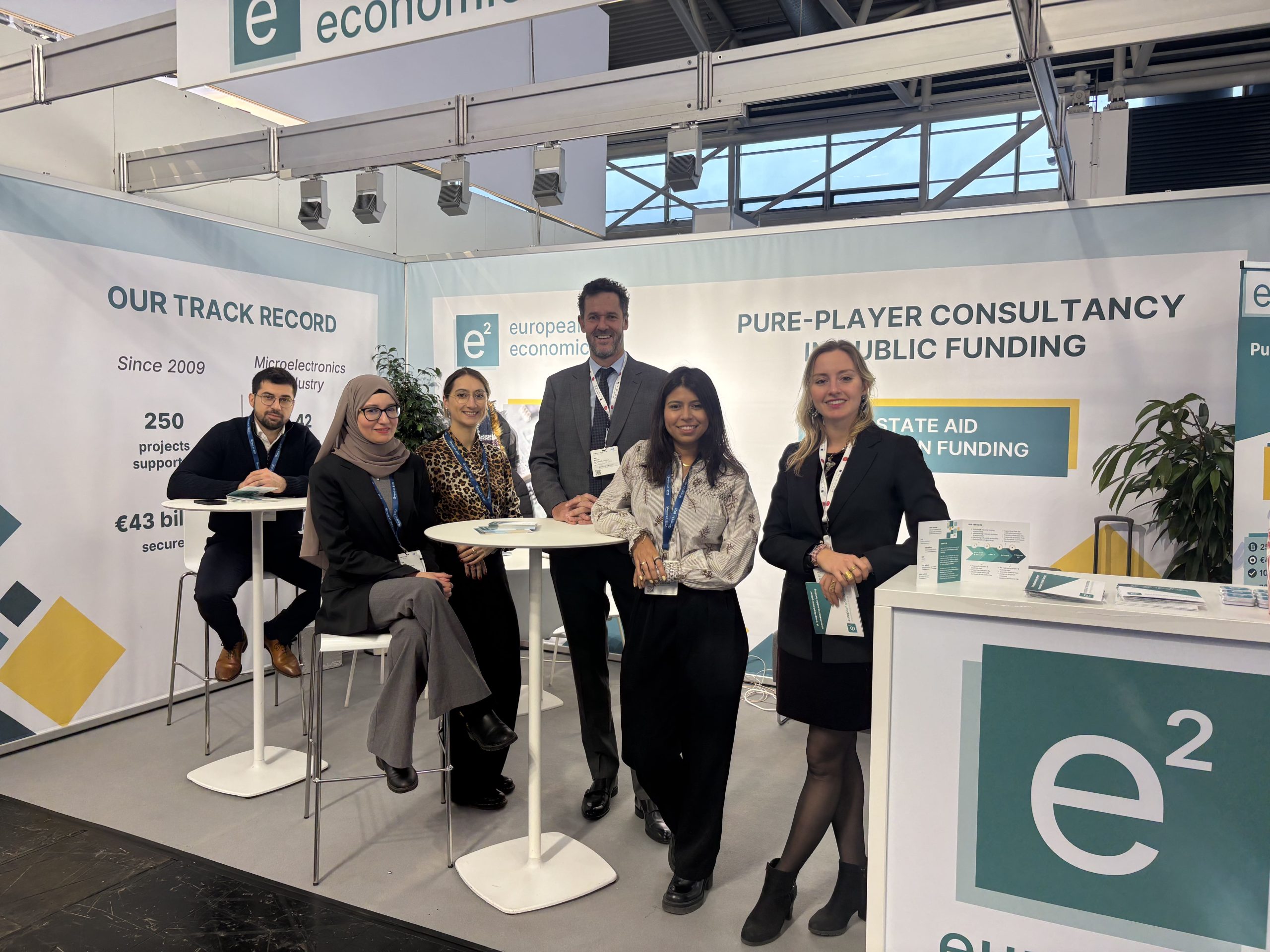
The european economics team was present at SEMICON Europa, the leading event for the semiconductor industry in Europe. The exhibition provided an opportunity to showcase our expertise in European public funding and our pivotal role in supporting strategic industrial projects.
A strong track record in microelectronics
Since 2009, european economics has been supporting companies and institutions with their industrial projects:
-
42 strategic projects supported in the microelectronics sector
-
€18 billion in public funding secured
-
Expertise across fabless companies, IDMs, foundries, equipment suppliers and OEMs
Our clients benefit from comprehensive support, from project design to State aid notifications, achieving a 100 % success rate for notifications to the European Commission.
IPCEI-AST: a new European opportunity
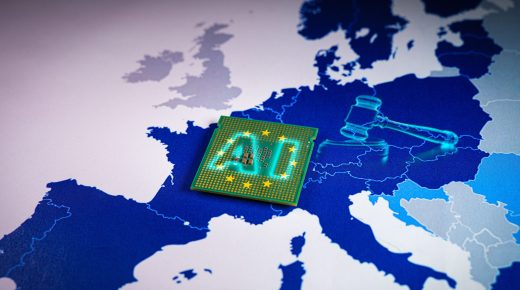
Calls for expressions of interest for the IPCEI on Advanced Semiconductor Technologies (AST) are currently being launched by the 15 participating Member States. We assist our clients in preparing and structuring their applications to secure funding. This initiative complements the EU Chips Act and the previous IPCEIs on Microelectronics in 2018 and 2023 (ME/CT), aiming to strengthen European industrial sovereignty and the continent’s competitiveness.
Inspirational presentations
Narjiss HADDAOUI, Managing Director, delivered a presentation titled “Chips and sovereignty: europe’s race to compete”.
Drawing on Kondratiev and Schumpeter to illustrate the end of the economic cycle that began in the 1980s and the emergence of new critical dependencies, she highlighted that:
-
Over 80 % of advanced semiconductors consumed in Europe are imported from Asia, revealing a major strategic dependency.
-
Artificial intelligence now generates over 175 zettabytes of data per year, representing a critical challenge for digital and industrial sovereignty.
-
Investment required to develop local AI and microelectronics capabilities could exceed €200 billion by 2030, through programmes such as InvestAI and the Chips Act.
-
The end of the globalisation era and ongoing geopolitical tensions highlight the need for strong European sovereignty, to prevent critical dependencies in raw materials, technologies, and knowledge.
-
Europe must accelerate coordination to remain competitive; the creation of a Sovereignty Fund was suggested as a lever to overcome coordination challenges between Member States and reinforce strategic investments at the European level.
Marc ISABELLE, CEO and Founder, outlined the role of public funding for strategic industrial projects in Europe, citing examples such as a 300 mm semiconductor production project, requiring €10 billion in investment and receiving €5 billion in EU grants.
Marc also emphasised the importance of counterfactual scenarios to calculate optimal funding and secure projects against global competition.
The European semiconductor industry is at a strategic crossroads, shifting from a commercial to a geopolitical priority, yet still lagging behind Asia and the US in terms of manufacturing capacity, advanced nodes (3 nm and below), and AI-enabling chips. The upcoming IPCEI on Advanced Semiconductor Technologies and EU Chips Act 2.0 will be critical to accelerate R&D funding, scale production, and reinforce Europe’s technological sovereignty.
Marc Isabelle, Ph.D., Fondateur & CEO, european economics
Conclusion: Europe must act quickly
european economics’ presence at SEMICON Europa underlines our expertise in European public funding and our pivotal role in supporting strategic industrial projects.
We help companies navigate a complex environment and strengthen European industrial sovereignty through the securing of public funding.
Interested in assessing the funding potential for your semiconductor project? Contact us to learn more.